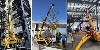
Vacuum lifters are becoming essential equipment in the construction industry. They make lifting and positioning heavy cladding faster, safer, and more efficient-helping companies save time and reduce labor costs. If you're new to vacuum lifters, this guide will walk you through everything you need to know, from how they work to their benefits and safety precautions. To explore our full range of vacuum lifting equipment, browse our selection here.
What Is a Vacuum Lifter and What Does It Do?
A vacuum lifter is a material-handling device that uses vacuum technology to lift and transport heavy objects. It works by creating low-pressure suction, which securely attaches the lifter to the load.
This equipment offers a safer and more efficient alternative to manual lifting. Repeatedly handling heavy weights can cause strain and injuries, leading to downtime. By reducing physical effort and improving workplace safety, vacuum lifters minimize risks and help maintain productivity.
How Do Vacuum Lifters Work?
Vacuum lifters use suction pads connected to a lifting tube. These pads create a secure airtight seal with the object, allowing it to be lifted without the need for straps or additional tools.
Depending on the model, lifters may use single or multiple suction pads mounted on a lifting beam. By changing the suction pad type, operators can handle different materials-such as concrete slabs, glass, barrels, or plastic boxes-even if the surfaces are uneven.
The strong grip and precise control allow a single operator to lift, move, and position loads efficiently, improving overall workflow.
Types of Vacuum Lifters
1. VLT (Vacuum Lifting Tube)
A Vacuum Lifting Tube uses suction pads to form an airtight seal with the material. As vacuum pressure builds, the load is lifted smoothly. The tube itself acts as both the vacuum source and lifting mechanism.
- Best for: barrels, boards, large boxes
- Typical industries: shipping, logistics, and warehousing
2. VLA (Vacuum Lifting Attachment)
A Vacuum Lifting Attachment is a detachable suction unit that can be mounted on other lifting equipment such as forklifts or cranes. This setup increases versatility for on-site handling.
- Benefits: reduces manual loading, minimizes fatigue and injury risks
- Ideal for: fragile materials such as glass sheets or stone countertops
3. Battery-Operated Vacuum Lifters
Battery-powered vacuum lifters are energy-efficient and eco-friendly, often equipped with dual batteries for extended use.
- Best for: companies aiming to reduce carbon emissions or electricity costs
4. Hand-Held Vacuum Lifters
Compact and portable, hand-held vacuum lifters are perfect for lighter loads and delicate materials.
- Best for: glass, polished stone, or surfaces prone to scratches and smudges
Benefits of Vacuum Lifting Equipment
- Cost-Effective – With minimal maintenance and long service life, vacuum lifters offer excellent return on investment.
- Safe – By reducing manual lifting, they help prevent strain-related injuries and accidents.
- Stable – Despite using air suction, vacuum lifters provide powerful, reliable lifting for heavy materials like concrete and metal.
- Efficient – They streamline the lifting process-simply position, seal, lift, move, and release-without the need for hooks or straps.
Vacuum Lifter Safety Precautions
- Proper Training – Operators should be trained to use the equipment safely and effectively.
- Regular Equipment Checks – Always confirm an airtight seal before lifting to avoid accidents.
- Material Awareness – Not all surfaces are suitable. Porous materials may not allow secure suction.
Vacuum Lift Equipment FAQs
- How does a glass vacuum lifter work?
- It creates a vacuum between the suction pads and the glass surface, forming a secure connection that allows safe lifting and transfer.
- Can I hire a vacuum lifter?
- Yes. At 4 Cladding Services, we offer vacuum lifter rentals for short-term projects and one-off tasks.
- What is the lifting capacity of a vacuum lifter?
- It depends on the model. For example, our Cool Boy lifter can handle up to 375 kg, while the Glass Boy has a capacity of up to 1,800 kg.