If you’re like most parking solution suppliers, you’ve probably dealt with clients who’ve had bad experiences: lifts that jam mid-stroke, platforms that wobble under a loaded SUV, or installations that take twice as long as promised—and that’s before you even think about post-install reliability. As someone who’s been in this game for over a decade, I can tell you quality isn’t just a buzzword—it’s the difference between a client who refers you to their neighbors and one who leaves a 1-star review online. Let’s break down how I make sure every parking solution my team delivers actually works, no cutting corners, no guesswork.
First off, start way before you touch a single piece of equipment. Too many folks jump straight into selling whatever’s cheap or trendy, but I always begin with a deep dive into the client’s specific needs. A small apartment building in downtown Chicago has way different requirements than a warehouse with 20ft high ceilings, right? For example, if a client has a tight footprint and needs to fit 10 cars in the same space that used to hold 5, a rotary platform might be the call. But I don’t just push the first rotating display platform I find— I send our techs out to measure their space, check their electrical capacity, even note if they have overhead tree branches that might interfere. This step isn’t optional; it’s how you avoid a “solution” that’s actually a headache waiting to happen. I once had a client skip this step because they thought their garage had enough power, and halfway through installing the rotary parking platform, we realized their 15-amp circuit couldn’t handle the lift’s motor. We had to redo all the wiring on our dime, but that’s better than it catching fire a month later.
Next up, equipment testing is non-negotiable. I don’t care if a component looks good on paper—we run every unit through its paces for at least 100 test cycles before it leaves our warehouse. That means loading it up with a weighted dummy (way heavier than any car that’ll use it) and running it up and down, rotating it, locking it into place, every single mode. For scissor lifts, we test the pit installed scissor car lift specifically, because pits have their own quirks—water seepage, debris buildup, even shifting soil. We spray water directly into the pit for 24 hours, then run the lift to make sure no moisture gets into the hydraulic lines. I’ve seen other suppliers skip this and get calls from clients saying their lift seized up after a rainstorm. That’s the kind of mistake that makes clients never call you back. Also, we only use parts from certified manufacturers—no cheap knockoffs from eBay. A good parking solution is only as strong as its weakest bolt, so we source everything from brands that have track records, not just low prices.
Installation is where most quality problems sneak in. I don’t send random subcontractors to do installs; my team is full-time, certified techs who’ve been with us for years. We give them a 2-day training every quarter on the latest equipment, and they have to pass a test before they can work on a new type of lift. When we install a four post four cars parking elevator, for example, we spend extra time making sure the posts are perfectly level—even a ¼ inch off can make the cars tilt or the lift jam. We also do a full test run with real cars (different sizes, too—sedans, SUVs, even a pickup truck if that’s what the client has) before we sign off. Once, a tech rushed an install and didn’t tighten the base bolts on a 2 post hydraulic shop vehicle lifts. A week later, the client said the posts were leaning. We had to come back, redo the entire base, and that tech lost a week’s pay—no exceptions. Rushing saves no one, and it ruins your reputation.
Post-install support is where you prove you care, not just make a sale. We set up a monthly check-in with every client for the first six months, and we have a 24/7 emergency line. But we also do proactive maintenance every quarter—we come out, check the hydraulic fluid, lubricate the moving parts, test the safety locks, even clean out the pit (if they have a scissor lift or rotary platform that sits in a pit). A few months back, a client in Texas had a rotary parking platform that started making a weird noise. Our tech went out, found a loose gear, tightened it, and saved them from a breakdown during the busy holiday season. That’s the stuff that makes clients call you first when they need another solution. Also, we train our clients’ maintenance teams to do basic checks—like looking for frayed cables or odd noises—so they can catch small issues before they become big ones.


Wait, let’s talk about safety too—this isn’t just a nice-to-have, it’s legally required. All our equipment meets OSHA standards, and we provide full safety training for the client’s staff. We install safety sensors on every lift that stop it if something’s in the way, and we have emergency stop buttons every 10 feet or so. I’ve heard horror stories about parking lifts that crushed cars because the sensor was disabled to “make things faster.” That’s not just bad quality—it’s dangerous, and we’d never cut corners there. Clients don’t want to be liable for an accident, so we make sure every safety feature works, every single time.
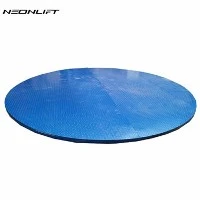
Another thing: customize when you need to. Not every parking solution is one-size-fits-all. For a client with very low garage ceilings, we can adjust the height of a four post parking elevator so it fits. For a client who needs to rotate their cars so they don’t have to back out (super popular in urban areas), we use a car rotary parking platform that’s calibrated to spin slow enough to be safe but fast enough to be convenient. We don’t try to force a square peg into a round hole—we adapt the solution to their space, not the other way around.
Let’s circle back to what I said at the start: quality is about reliability, safety, and support. As a supplier, if you deliver a solution that works for years, without breakdowns, with a team that’s there when they need you, that’s how you build long-term relationships. If you cut corners on testing, installation, or support, you’ll get a client who only calls you once.
If you’re in the market for a parking solution that’s built to last, not just installed to check a box, hit us up. We can walk through your space, test the equipment, and make sure every part works as it should, from the first lift to the final safety check. Don’t just go for the cheapest option—go for one that’s designed, tested, and installed with care, because your parking solution shouldn’t be a problem.
References:
- Occupational Safety and Health Administration (OSHA) Standards for Material Handling Equipment, 2023
- International Parking Institute (IPI) Guidelines for Parking Facility Design and Maintenance, 2022
- Automotive Lift Institute (ALI) Safety Standards for Vehicle Lifts, 2021
- National Fire Protection Association (NFPA) 70: National Electrical Code, Article 625 (Parking Garages), 2020