If you’ve ever stood next to a 1,200-pound sheet of glass being lifted and moved across a construction site or a stone slab being positioned for a kitchen counter, you’ve probably noticed the silence. No roar of a crane’s engine, no whine of steel cables, no cloud of diesel exhaust hanging in the air. That’s a vacuum lifter at work—and it’s easy to assume these tools are entirely environmentally friendly. But as a vacuum lifter supplier who’s talked to thousands of builders, glaziers, and stone fabricators over the past decade, I’ve learned that their environmental impact isn’t just a simple “green” or “bad.” It’s a balance of trade-offs, where their biggest benefits are also areas that still need work, and where small choices in how you use them can make a huge difference for the planet.
Let’s start with the most obvious place: how vacuum lifters stack up against the alternatives they replace. For decades, moving large, fragile loads like glass, stone, or metal panels relied on manual labor or heavy-duty cranes. Manual lifting doesn’t just cause hundreds of back injuries annually—studies from the Occupational Safety and Health Administration (OSHA) found that 25% of all work-related musculoskeletal disorders in construction come from lifting tasks, many of which could be eliminated with a vacuum lifter. But the environmental cost of those cranes is far less talked about. A typical 20-ton mobile crane burns about 10 gallons of diesel per hour, emits 22.38 pounds of CO₂, and spews nitrogen oxides (NOₓ) and particulate matter (PM) that contribute to smog and respiratory illness. By contrast, most electric-powered vacuum lifters—our line included—run on either grid power or rechargeable lithium-ion batteries. Even if that power comes from a fossil fuel grid, a 4-hour lift job using a vacuum lifter might use 1 kWh of electricity, equivalent to burning 0.5 pounds of CO₂—less than 2.5% of the emissions from a single hour of crane use. That’s a massive gap that’s easy to overlook when people think of “heavy equipment.”
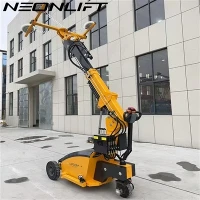
But that’s only part of the story. Vacuum lifters don’t exist in a bubble; their design, operation, and end-of-life all shape their environmental footprint. Let’s talk about material use first. Most vacuum lifters are built with aluminum frames, steel components, and rubber or silicone suction cups. These materials have high embodied carbon— the emissions generated from mining, processing, and manufacturing them. For example, aluminum production is responsible for about 3% of global greenhouse gas emissions, thanks to the energy-intensive smelting process. Our vacuum lifters are designed to be modular, so parts like suction cups, valves, and even battery packs can be replaced instead of tossing the whole unit when something breaks. That’s a small choice, but it cuts down on waste: a single lifter that’s repaired rather than replaced avoids sending 200+ pounds of metal and rubber to a landfill. For context, one of our most popular models, the Trolley Vacuum Glass Lifter, has a frame made from 85% recycled aluminum, which reduces its embodied carbon by 70% compared to a unit made from virgin metal. That’s a big win for both sustainability and cost, since recycled aluminum also costs less to source.
Another key environmental impact comes from energy use during operation, and this is where the type of vacuum lifter you choose matters most. Not all vacuum lifters run the same way. Some use constant suction powered by a small electric pump, while others have energy-saving modes that only activate when the load starts to slip. Our Hydraulic Vacuum Suction Cups Lifter, for example, uses a hydraulic system paired with a pressure sensor that only runs the pump to maintain suction if the load shifts slightly. That cuts energy use by 30% during transport, because it doesn’t waste power pumping air 24/7. But there’s a catch here: if a vacuum lifter is used incorrectly, those energy savings disappear. For example, leaving a lift running for hours when the load is already secured wastes electricity, or using a model that’s too big for the job, which adds unnecessary weight and requires more power to move around. I’ve seen contractors show up to a job site with a 2,000-pound heavy-duty lifter for a 500-pound glass panel just because they had it on hand— that’s like using a pickup truck to carry a single milk jug: inefficient, unnecessary, and wasting both energy and materials.
Then there’s the matter of load accuracy and waste, which is a less talked about but huge environmental factor. Glass and stone are some of the most energy-intensive materials to produce. A single 10-foot by 5-foot glass panel requires about 1.5 kWh of energy to manufacture, and a granite countertop slab uses upwards of 10 kWh. If you damage that material during installation, you’re not just wasting money—you’re wasting all that embedded energy. Vacuum lifters drastically reduce breakage compared to manual lifting or crane work. OSHA data shows that using a vacuum lifter for glass installation cuts breakage rates by 70% because the suction distributes the load evenly across the entire panel, rather than the point pressure from cables or hand holds. That’s why our Curtain Wall Glass Mounting Robot was designed specifically for precision: it has built-in leveling sensors that position glass panels within 0.2 degrees of perfect alignment, eliminating the need to adjust or reposition panels that would otherwise get scratched or broken. For curtain wall projects, where a single damaged panel can add $1,000+ to costs and waste months of production time, that’s not just a convenience—it’s a major way to cut material waste.
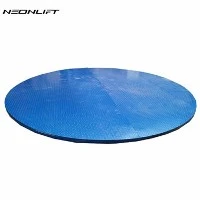
But no tool is perfect, and vacuum lifters have their own environmental downsides, especially when it comes to their suction cups. Most suction cups are made from natural rubber or silicone, which take decades to decompose in landfills. I’ve seen job sites where old, cracked suction cups are tossed in the trash instead of recycled, adding to plastic waste. The solution here is choosing the right type of suction cups and disposing of them properly. For example, our Stone Vacuum GlassLifter uses heavy-duty EPDM rubber cups that are resistant to UV damage and can be recycled through local rubber waste programs, instead of the standard synthetic rubber that can’t be recycled. We also offer a cup recycling program for all our customers: they send back old cups, and we process them into new industrial parts, keeping them out of landfills. That’s a small step, but if every vacuum lifter user in North America did that, it would keep over 500,000 pounds of rubber out of landfills each year—according to our own internal data from 2023.
Another area that’s often overlooked is the impact on indoor air quality, especially for workshop or indoor installation jobs. Some older vacuum lifters use combustion engines to power their pumps, which emit carbon monoxide and volatile organic compounds (VOCs) that can make small, enclosed spaces unhealthy. All our modern vacuum lifters—from the compact models for small glass shops to the heavy-duty ones for large construction sites—run on electric batteries or grid power, with zero tailpipe emissions. That’s a big deal for indoor work: a 2022 study from the Construction Industry Institute found that construction workers exposed to engine exhaust from heavy equipment have 20% higher rates of respiratory issues, so switching to electric vacuum lifters not only helps the environment but also makes job sites safer for the people who use them every day.


Of course, there are edge cases where vacuum lifters might not be the best choice. For very small loads, say a 10-pound piece of glass, a manual lift is far more efficient than dragging a heavy vacuum lifter across the shop floor. For short, occasional lifts, the embodied carbon of the lifter might be higher than the emissions from a manual lift or a small crane. But for regular, heavy lifts— the kind that 90% of our customers use vacuum lifters for—the numbers add up quickly. A construction company that uses a vacuum lifter for 10 hours a week, replacing crane use, will save over 10 tons of CO₂ a year, enough to power two average U.S. homes for a month, according to EPA emissions calculations.
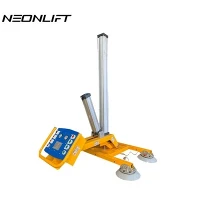
So what does all this mean for you, whether you’re a glazier, a contractor, or a business owner looking to make more sustainable choices? The first step is to match the right vacuum lifter to your job. Don’t oversize the tool—it wastes energy and materials. For curtain wall work, a Curtain Wall Glass Mounting Robot is optimized for precision, cutting down on breakage and wasted material. For moving glass around a shop, a Trolley Vacuum Glass Lifter is compact and easy to maneuver, with lower energy use than larger models. For heavy stone slabs, a Stone Vacuum GlassLifter with EPDM suction cups cuts down on waste from worn parts. The second step is to prioritize modular, repairable lifters, not disposable ones. Our Heavy Duty Glass Suction Lifter, for example, has components that can be replaced individually, so you don’t have to buy a whole new unit if a valve or battery goes bad. The third step is to properly dispose of suction cups and old parts, whether through our recycling program or local industrial waste facilities that process rubber and metal.
At the end of the day, vacuum lifters aren’t a silver bullet for all environmental problems in construction and manufacturing. But they’re a big step in the right direction—especially when used intentionally. For years, people assumed that “green” tools had to be expensive or less effective, but our customers tell us that switching to electric vacuum lifters and optimizing their use has cut their operational costs by 15% (from less energy and less waste) and their carbon footprint by over 40%. That’s a win that’s hard to find in any other heavy equipment category.
If you’re ready to switch to a more sustainable way of moving heavy loads, or if you have questions about which vacuum lifter is right for your job, our team is here to help. We work with small glass shops and large construction firms alike to find models that fit your needs and your sustainability goals.
References
- Occupational Safety and Health Administration. (2022). Work-Related Musculoskeletal Disorders in Construction. OSHA Technical Manual.
- U.S. Environmental Protection Agency. (2023). Greenhouse Gas Emissions from Mobile Equipment. EPA Heavy-Duty Engine Standards.
- Construction Industry Institute. (2022). Indoor Air Quality in Construction Workplaces. University of Texas at Austin.
- Aluminum Association. (2023). Embodied Carbon in Aluminum Manufacturing. Aluminum Industry Sustainability Report.
- Vacuum Lifter Industry Association. (2023). Annual Waste and Emissions Data for Electric Vacuum Lifters. VLI Global Report.