If you’ve ever stood at the edge of a construction site, a warehouse loading dock, or even inside a busy retail store ceiling, watching workers zip up and down on a scissor lift, you might have wondered: how much space do they actually have to work up there? As a scissor lift supplier, this is one of the most common questions we get—alongside, “will this unit fit the jobsite we’re working on?” The working platform size of a scissor lift isn’t just a number on a spec sheet; it’s the make-or-break detail that keeps operators safe, lets them carry the tools and materials they need, and ensures a job gets done right, on time. Today, we’re breaking down everything you need to know about platform sizes, why they matter, and how to pick the right one for your work, no matter the project.
First, let’s get the basics straight: when we talk about “working platform size,” we’re not just referring to the flat surface you stand on. We mean two key measurements: the deck area itself, and the total usable space an operator has while completing tasks. A lot of people mix up working height (how high the lift can reach) with platform size, but they’re totally separate variables. A small personal scissor lift, for example, might only reach 19 feet high, but its platform is compact enough to fit through a standard 36-inch doorway—making it perfect for small residential or indoor projects. If you need something for larger-scale work, an aerial scissor lift might have a bigger deck to accommodate multiple workers and bulkier supplies.
Let’s start with the range of platform sizes across the most common scissor lift types, because that’s where most of the variation happens. Personal scissor lifts, designed for light-duty indoor tasks like hanging light fixtures, painting, or maintaining office equipment, tend to have the smallest platforms—usually between 20 and 36 square feet. That’s just enough space for one operator, their tool belt, and a few small supplies. If you’re working in tight quarters, like a narrow hallway or a storage aisle with low clearance, this size is ideal. You can learn more about these compact units by checking our page for the personal scissor lift, which outlines their compact dimensions and load capacity for home or small business projects.
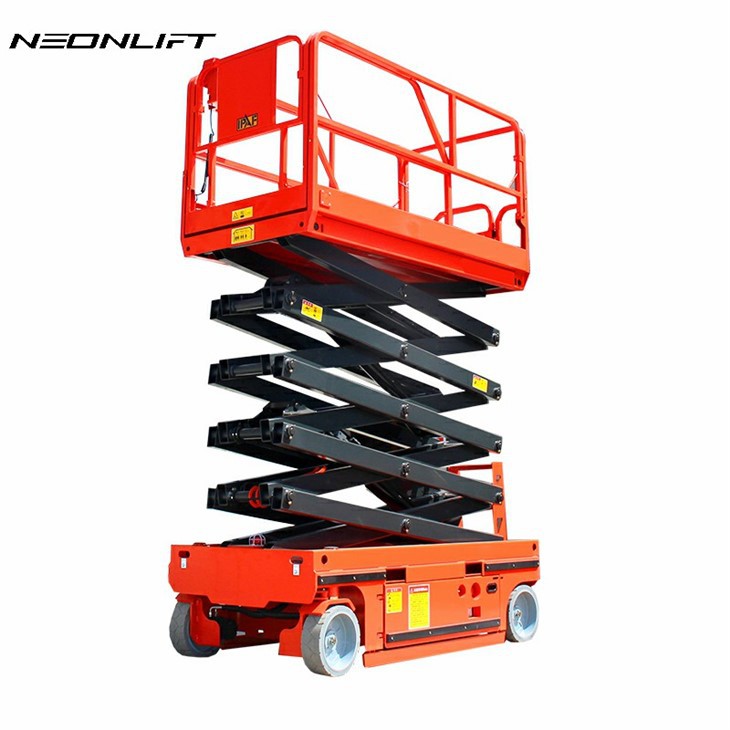
Next up, electric indoor scissor lifts, the workhorses for warehouse maintenance, retail construction, and renovation work inside buildings. These models are a step up from personal lifts, with platform sizes that typically run from 40 to 80 square feet. The extra space lets operators bring rolling toolboxes, power cords, or even small pieces of material, like drywall panels or ceiling tiles, up with them. A 50-square-foot platform, for example, is big enough for two trained workers to stand side-by-side comfortably, as long as they stay within the lift’s load limit (which we’ll talk about shortly). What makes electric indoor lifts stand out, besides their size, is their zero-emission operation—perfect for enclosed spaces where gas fumes would be a hazard. Our electric indoor scissor lift page has detailed size specs for every model, from the compact 24-inch wide units for narrow aisles to the 7-foot wide models built for large distribution centers.
For outdoor work, you’ll look at heavy-duty aerial scissor lifts, which are built to handle rougher terrain and larger job sites. These models have the biggest platform sizes of any common scissor lift, often ranging from 80 to over 100 square feet. A 100-square-foot platform can hold three workers plus heavy equipment, like a power washers, pipe sections, or roofing materials, making them ideal for new construction, bridge maintenance, or stadium projects. But size isn’t the only factor here—outdoor scissor lifts also have higher weight capacities, because they’re built to carry more people and gear at higher heights (up to 50 feet or more). If you’re working on an outdoor project, it’s crucial to balance platform size with the terrain: a larger platform won’t do you much good if the lift’s tires can’t handle uneven ground, for example. Our aerial scissor lift page has comparisons of outdoor models, including their platform dimensions, weight ratings, and rough-terrain capabilities.
Wait a second—we should mention that there’s a difference between a scissor lift platform’s base size and its extended size? No, wait, most scissor lift platforms are fixed in their work position, unlike boom lifts that can articulate or extend their reach. But when we talk about usable platform space, we’re also including the guardrails, right? No, the working area is the actual non-railed floor of the deck. Let’s clarify that to avoid confusion. The guardrails add a safety buffer, but they’re not counted in the working platform size—what counts is the flat area an operator can actually stand on and move around in while performing tasks. That’s why, when you’re calculating how much space you need, you should subtract a little for tool belts and foot traffic, so you’re not crowding the deck.
Another important point: load capacity ties directly to platform size. A common mistake people make is assuming a larger platform means you can fit more people and more gear, but every scissor lift has a maximum total load capacity, and that number is non-negotiable. For example, a small personal scissor lift with a 25-square-foot platform might have a max load of 500 pounds—so that’s one operator plus their tools, no extra space for a second person. A 60-square-foot electric indoor scissor lift, by contrast, might have a max load of 1,500 pounds, which lets two workers plus their supplies fit comfortably. That’s why looking at both the platform size and the load capacity together, not just size alone, is key. If you overload a scissor lift’s platform, it can become unstable, especially at higher working heights—we always emphasize this to our customers during purchasing consultations, because safety is our top priority.
Now, who needs to pay extra attention to platform size? Let’s break it down by industry, because that’s where the real-world use case comes in. Warehouses: if you’re maintaining high storage racks or fixing overhead conveyor systems, you might need a platform that’s narrow enough to fit between aisles, but wide enough to hold a ladder or parts bin. Electric indoor scissor lifts with 30-inch or 36-inch wide decks are perfect here, because they fit through standard warehouse aisle doors and narrow storage gaps. Retail construction: when you’re fitting out a new store, you might need to move between different sections of the building, so a compact platform that fits through interior doorways is a must. Many of our small electric models, like the ones listed on our electric platform lift page, have platforms that are only 32 inches wide—wide enough for one worker plus supplies, but small enough to navigate tight retail hallways.

Residential users, like contractors doing interior painting or gutter replacement, often go for personal scissor lifts because of their small size and low weight, which means they can be transported in a standard pickup truck. The small platform size is ideal for single-person work, but you still have to make sure it’s high enough for the job and can support your tools. A common question here is, “can I use a personal scissor lift for exterior work?” The short answer is no—personal lifts are designed for indoor, flat surfaces only, and their smaller frames can’t handle the wind or uneven ground of outdoor job sites.
For larger projects, like new construction or event setup, you’ll need an aerial scissor lift with a bigger platform. Event companies, for example, might use a large scissor lift with an 80-square-foot platform to hang lighting rigs or set up stage backdrops—enough space for two electricians plus their scaffolding clamps and cable cutters. The heavy-duty tires on these outdoor models also let them drive over grass, gravel, and concrete without getting stuck, which is a big plus for event sites that aren’t fully paved.
We also get a lot of questions about custom platform sizes. Some customers have unique jobs, like accessing a very narrow utility pole or a small attic space, so they ask if we can modify a standard lift’s platform. While we can’t make major changes to the structural integrity of a lift’s platform (that would compromise safety), we do offer a range of mid-sized models that bridge the gap between personal lifts and large aerial units. For example, our mid-range electric scissor lifts have platforms that are 48 inches wide and 8 feet long, which is a great middle ground for jobs that need more space than a personal lift but don’t require the full size of a large outdoor unit.
Now, let’s talk about how to measure a scissor lift’s working platform size if you’re looking at a spec sheet, because not all listings label this clearly. The standard way to measure is length by width, in feet or inches, and that gives you the total square footage. For example, a platform that’s 6 feet long and 5 feet wide is 30 square feet. You should also check the “work area” note, which is sometimes listed separately from the overall platform size—this number excludes the space taken up by the scissor mechanism’s base, but for all practical purposes, the length and width numbers will give you a good idea of how much usable space you have.
Safety is always tied to platform size, too. OSHA (Occupational Safety and Health Administration) has specific regulations for working on aerial lifts, including requirements for platform size and load limits. For example, OSHA mandates that a scissor lift’s platform must be large enough to accommodate the number of workers and their equipment without overcrowding, and that operators have enough space to maneuver and maintain their balance. That’s why we never recommend trying to cram extra people or gear onto a platform—even if the spec sheet says it’s “big enough.” It’s always better to size up a lift than to risk an accident.
If you’re still unsure which platform size is right for your job, our team is here to help. We’ve worked with contractors, warehouse managers, event planners, and residential customers across industries, so we can help you match your project’s needs—whether it’s indoor, outdoor, small-scale, or large-scale—to the right scissor lift. We have a full range of models, from compact personal units to heavy-duty aerial lifts, all with clear platform size specs and safety ratings. You can browse our full selection by checking out our scissor lift platform page, which has detailed measurements and use cases for every model we carry.
When you’re shopping for a scissor lift, it’s easy to focus on working height first, but platform size is just as critical. A lift that can reach 60 feet high is useless if the platform is too small to hold your tools or fit through your jobsite doors. Taking the time to measure the space you need, account for load capacity, and match the platform size to your project type will save you time, money, and stress in the long run.
If you’re ready to find the right scissor lift for your next project, or you have more questions about platform sizes, load limits, or specific models, we’d love to connect with you. Our team can walk you through the specs, help you compare models, and even share recommendations based on similar projects we’ve worked on. Don’t hesitate to reach out to start the conversation about finding the perfect scissor lift for your needs.
References:
- Occupational Safety and Health Administration (OSHA). (2023). Aerial Lift Standards: Scissor Lifts. Retrieved from osha.gov
- International Powered Access Federation (IPAF). (2022). Scissor Lift Platform Size Guidelines. Retrieved from ipaf.org
- National Safety Council (NSC). (2021). Aerial Lift Safety Best Practices. Retrieved from nsc.org