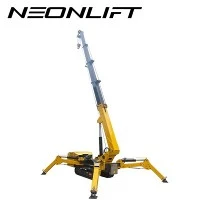
Hey everyone! If you’re in the market for a trailer man lift, you already know these things are game-changers for outdoor construction, tree trimming, facility maintenance, and pretty much any job that needs getting up high. But let’s be real—stability is the make-or-break factor here. I’ve been working as a trailer man lift supplier for over a decade now, and trust me, I’ve seen it all: from small mishaps that turned into big headaches to near-disasters that could’ve been avoided with just a few smart checks. Today, I’m breaking down exactly how to make sure your trailer man lift stays solid, safe, and ready to work, no matter what job you’re tackling.
First off, let’s start with the basics: a trailer man lift isn’t like a fixed aerial lift—it’s towable, which means it’s subject to the same kind of balance issues as a trailer on the road, plus the added stability strain when it’s extended up in the air. That’s why every single step we take has to address both the travel phase and the operational phase. Let’s dive in.
When you first set up your trailer man lift on a job site, the very first thing you should do is pick the right spot. I can’t tell you how many times I’ve seen a crew try to set up on soft, uneven ground and wonder why the lift feels wobbly before they even turn the key. It’s not just about “level” — it’s about ground bearing capacity too. If you’re on grass, dirt, or gravel, you need to put down outrigger pads or cribbing to spread the weight. Even if you’re on paved asphalt, that surface can shift if it’s old, cracked, or has standing water under it. So take 5 minutes to walk the area, test the ground with your foot, and make sure there’s no debris or sloped sections that’ll throw your balance off. Oh, and never set up near holes, trenches, or underground utilities—those can collapse under the lift’s weight and cause a nasty fall.
Next, let’s talk about leveling. This is non-negotiable. Most trailer man lifts have built-in bubble levels, but I always recommend double-checking with a separate spirit level just to be safe. If your lift’s even slightly tilted, the load can shift unexpectedly, and the outriggers won’t work as intended. For example, if one side is 2 degrees lower than the other, that can throw off the lift’s center of gravity by a significant amount. When you’re leveling, make sure to adjust each outrigger independently—don’t just extend all of them to the same length if one side needs extra height. Our team at the supplier always emphasizes this because cutting corners here is a quick way to a dangerous situation.
Speaking of outriggers, that’s another big one. The outriggers are your lift’s “legs” — they’re what take the weight off the trailer’s tires and distribute it evenly across the ground. A lot of first-time operators make the mistake of only extending the front and back outriggers, but no—you need to extend all four, and fully. Every outrigger should be touching the ground firmly, with no gaps between the pad and the surface. If you have a hydraulic outrigger cherry picker like the ones we stock, pay extra attention to the pressure gauge—if the gauge isn’t showing consistent pressure across all outriggers, that means one’s not set right, and you need to adjust it. I’ve linked one of our top hydraulic outrigger models here so you can check it out: Hydraulic Outrigger Cherry Picker. Also, never leave the trailer’s tires on the ground when you’re operating the lift—those tires are designed for towing, not for bearing heavy overhead loads. Taking the weight off the tires lets the outriggers do their job properly.
Once you’re set up, it’s time to do a pre-operational inspection. This isn’t just a formality—it’s how you catch small issues before they turn into big stability problems. Start with the lift’s structural components: check for any cracks in the boom, loose bolts, or damaged outrigger pads. Even a tiny crack in the boom can get worse under load and affect balance. Next, test the controls—make sure the lift extends, retracts, and tilts smoothly, with no jerky movements. Jerky movements mean the hydraulics might be off, which can cause sudden shifts in the center of gravity. For example, if the boom lurches when you extend it, that’s a red flag. If you’re using a longer model, like an extended boom lift, keep in mind that longer booms have more leverage, so even small control issues can lead to bigger stability risks. Here’s our extended boom lift page if you need a model that’s built for taller jobs: Extended Boom Lift.
Then there’s weight capacity—this is the rule that’s there for a reason, I swear. Every trailer man lift has a rated load capacity, and that includes the weight of the operator, their tools, and any materials they’re carrying. A lot of guys try to cram extra stuff into the basket to save a trip, but that extra weight throws off the center of gravity, especially when the boom’s extended. I remember a customer a few years back who tried to carry 5 extra bags of concrete mix in the basket when his lift was only rated for two, and when he extended the boom to 40 feet, the lift started tilting so bad he had to hit the emergency stop to avoid falling. Don’t be that guy—check the load rating, add up all the weight, and leave a little buffer just in case. For jobs that need to haul heavy loads, our heavy load outdoor construction lifts are perfect—they’re built with reinforced booms and stronger outriggers to handle more weight. Check that out here: Heavy Load Outdoor Construction Lift.


Now, what about when you’re moving the lift between job sites? That’s when stability on the road matters. When towing a trailer man lift, make sure the boom is fully retracted, locked in place, and secured with the safety chains. The outriggers should be fully retracted too, and the lift’s brakes should be engaged. Don’t tow the lift faster than the speed limit for trailers—usually 55 mph max, depending on the model—and leave extra stopping distance, because the trailer’s weight is higher than a regular car. Also, make sure the trailer’s lights and reflectors are working, so other drivers can see you. If you’re in need of a reliable towable model, our towable boom lifters for sale are a popular choice for small contractors and DIYers: Towable Boom Lifter For Sale.
Another thing I see people ignore is weather conditions. Wind is the enemy of aerial lifts. If the wind’s blowing over 20 mph, you shouldn’t be operating a trailer man lift. Higher wind speeds can push the boom and basket around, making it impossible to keep balance. If the wind picks up while you’re mid-job, lower the boom, retract it, and secure the lift immediately—don’t wait to finish the task. Rain and snow are also issues because they make the ground slippery and the controls harder to handle. If you’re working in wet conditions, take extra time to check the outriggers and make sure they’re not sliding on the ground.
Wait, let’s not forget about maintenance. A lift that’s not properly maintained will never be stable. Schedule regular inspections with a qualified technician, check the hydraulics for leaks, lubricate the boom joints, and make sure all safety features are working. We also recommend doing a post-job check every time you use the lift—clean out any dirt or debris from the outriggers, retract them slowly, and inspect for any damage that happened during the day. Our trailer type lifts are designed for easy maintenance, so you can keep them in good shape without a ton of hassle. Here’s our page for that: Trailer Type Lift.
I know a lot of operators think “stability” is just something the manufacturer handles, but honestly, it’s a team effort between the supplier, the operator, and the crew on site. At our company, we don’t just sell lifts—we train our customers on how to use them safely, and we’re always here to answer questions if something feels off. If you’re looking for a trailer man lift that’s built with stability as a top priority, we’ve got a range of models to fit every job, from small residential jobs to big outdoor construction projects. Whether you need a compact towable model for tight spaces or a heavy-duty lift for big loads, we can help you find the right one. If you’re ready to connect for a procurement chat or have questions about our lifts, just reach out—we’re here to make sure you have a safe, reliable lift that keeps your jobs on track.
Before I wrap this up, let me recap the key points to make sure you don’t forget them: pick a firm, level spot, extend all outriggers fully, check load capacity, do pre-operational inspections, avoid high winds, maintain the lift regularly, and follow proper towing procedures. Stick to these, and you’ll have zero stability issues on your jobs. Thanks for reading, and stay safe out there.
References:
- Occupational Safety and Health Administration (OSHA). (2019). Aerial Lift Standards: Trailer-Mounted Boom Lifts. Retrieved from osha.gov
- International Organization for Standardization (ISO). (2021). ISO 18878: Mobile Aerial Work Platforms - Design Calculations for Stability. Retrieved from iso.org
- American National Standards Institute (ANSI). (2020). ANSI A92.5: Boom-Supported Aerial Work Platforms. Retrieved from ansi.org
- National Association of Construction Equipment Rental (NACER). (2022). Best Practices for Trailer Lift Setup and Operation. Retrieved from nacerental.org