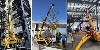
Scissor lifts are employed across industrial and construction environments to offer stable, elevated support for personnel. They enable the vertical transportation of workers and tools to required heights.
Although scissor lifts share some functional similarities with boom lifts, they belong to a distinct equipment category. Boom lifts have different specifications regarding platform elevation, load capacity, and operational safety. Scissor lifts are categorized as mobile scaffold systems.

Weight varies significantly by model. Electric scissor lifts, for instance, are generally lighter than robust off‑road units.
Depending on the specific type and design, scissor lifts can weigh between 1,600 lbs and 17,000 lbs. Compact models, like a 15‑ft DAXLIFTER Mini scissor lift, weigh substantially less-approximately 1,600 lbs-compared to a standard 19‑ft unit. When selecting equipment, consider overall dimensions as they directly influence total weight.
Why Does Scissor Lift Weight Matter?
The weight of a scissor lift directly impacts project efficiency. It largely determines platform capacity, lifting capability, and maximum working height. Specifically, weight affects:
- Equipment Transport: Lighter models are easier to move. For example, a transport truck could carry up to 22 lightweight hybrid units-about eight more than conventional lifts.
- Load Capacity: Larger, heavier off‑road lifts typically offer greater platform capacity and higher weight limits.
- On‑site Personnel: With a lighter‑duty lift, more workers can be on the platform before reaching its maximum load rating.

How to Find a Scissor Lift's Weight
Consult the equipment specification sheet for precise weight data. DAXLIFTER provides detailed information on lift weights and other technical specs.
Always review the operator's manual before using any heavy machinery, paying special attention to safety instructions.
Common Scissor Lift Categories & Builders
While operating principles are similar, lifts differ in type, model, and scale.
- Light‑Duty Lifts: These have lower ground pressure and reduced load ratings. Usually electric, they are emission‑free, quiet, and suitable for indoor use. Their portability and ease of operation make them ideal for confined spaces and tasks on flat, stable surfaces that do not require extreme height.
- Medium‑Duty Lifts: Heavier than light‑duty versions, these offer greater versatility for indoor/outdoor use, along with higher platform capacity and working height.
- Heavy‑Duty/Off‑Road Lifts: Typically 4WD gasoline‑powered units designed for rough terrain. Although significantly heavier and wider, the added mass translates to superior lifting capacity, enabling them to carry more personnel and equipment over longer operating periods.
Primary Applications
Scissor lifts support elevated work on construction sites, providing a safer and more efficient alternative to ladders or less stable equipment.
Key construction uses include:
- Transporting Personnel: Depending on platform capacity, lifts safely carry workers to the required height.
- Moving Materials: They facilitate the vertical movement of tools, materials, and heavy items.
- Accessing Elevated Work Areas: Lifts make high‑level tasks feasible by delivering workers and equipment securely.
- Beyond construction, scissor lifts serve numerous other sectors:
- Landscaping: Assisting with tree trimming, lighting installation, and moving equipment to height.
- Commercial Maintenance: Used for changing light fixtures, installing signage, performing inspections, and utility work.
- Warehousing: Aiding in high‑level picking, sorting, and transporting heavy stock.

Selecting the Right Scissor Lift
Consider these factors when choosing a model:
Budget: Rental rates range from about $102 to $379 per day, varying by rental period, height, and capacity.
- Job Scope & Site Conditions: Assess whether work will be indoors/outdoors, on flat or uneven ground. Electric lifts suit stable indoor environments; rough‑terrain diesel models are better for outdoor, extended operations.
- Platform Size & Weight Needs: Match the lift's capacity to the expected load. Heavy‑duty units are necessary for multiple workers or heavy tools; lighter tasks may only require a compact model.
- Lifting Height & Stability: Ensure the lift provides adequate vertical reach and stability for the tasks at hand.
For further information on aerial work platforms, please contact us.