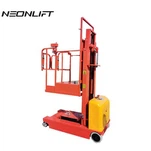
How To Choose Warehouse Stacker: Full‑Electric Stacker VS Semi‑Electric Stacker Comparison
Goods stacking, order‑picking and storage form core daily workflows inside warehouses and workshops. Many businesses struggle when purchasing material‑handling lifting equipment: should they invest in a full‑electric stacker or a semi‑electric stacker?
Some buyers believe full‑electric models save more manpower and deliver higher throughput. Others argue semi‑electric stackers feature lower upfront purchase costs. In truth, neither option is universally superior - suitability for your real‑world working conditions is what matters most. Below we break down the actual characteristics of both types of warehouse stacker, clarify selection logic, resolve common stacking‑operation pain‑points, help you avoid typical pitfalls and genuinely boost your overall warehouse productivity.

Understand Core Differences: Full‑Electric VS Semi‑Electric Warehouse Stacker
Many procurement personnel mix‑up these two machines. Their fundamental distinction lies within the power system, which directly determines working efficiency, applicable scenarios and long‑term operating expenses.
- Full‑electric stacker: Both travel and mast lifting are motor‑driven; no manual pushing or pulling is required. Operators complete forward‑reverse travel, steering and stacking cycles simply via control handles. Motors handle the entire workload, making it ideal for high‑intensity, high‑frequency warehouse operations.
- Semi‑electric stacker: Lifting function runs on electric power, while machine relocation relies on manual pushing. Electricity takes the strain out of heavy‑load lifting, yet operators still physically move the unit. Best suited for short‑distance transfers and low‑volume workloads.
Quick summary: Full‑electric warehouse stackers focus on high efficiency and labour‑saving performance for heavy‑duty frequent assignments. Semi‑electric stackers deliver cost‑effectiveness and easy manoeuvrability for light‑duty intermittent tasks. No single model outperforms the other in every respect; fit with on‑site conditions is decisive.
Full‑Electric Stacker: High‑Efficiency Workhorse For High‑Frequency Warehouses
If your warehouse carries out large volumes of repeated stacking and inbound‑outbound handling every day, a full‑electric stacker will be the better fit. It cuts down physical operator fatigue and meets demanding heavy‑duty operational requirements, solving stacking challenges for large‑scale warehouses.

Thanks to fully‑electric architecture, manual pushing is completely eliminated. Drive motor and lifting motor work in synergy for smooth travelling and seamless mast movements. Operators control all functions via multi‑function handles. Maximum stacking height can reach up to 4 metres, enabling precise alignment against high‑bay racking. It reduces human error caused by operator fatigue and lowers the risk of workplace injuries.
For high‑frequency workflows, real‑world throughput can be 2‑3 times higher compared with semi‑electric alternatives. Large warehouses, logistics transfer depots and e‑commerce fulfilment centres with heavy daily picking‑and‑stacking volumes benefit from faster goods turnover and shorter inbound‑outbound cycle times.
Comprehensive safety features come as standard: emergency power‑off switch, electromagnetic braking, anti‑fall hydraulic protection, heavy‑duty polyurethane wear‑resistant tyres and multiple protective mechanisms preventing cargo drop‑off and machine runaway. Selected models support adjustable travel speed, and routine inspection & maintenance work is straightforward.
It works well with standard pallets, boxed goods and mechanical components. Combined with a tight turning radius, it navigates narrow rack aisles freely and makes full use of vertical racking space to maximise total warehouse storage capacity.
Semi‑Electric Stacker: Practical Cost‑Effective Option For Small‑To‑Mid‑Size Warehouses
For small‑and‑medium‑sized warehouses or production workshops featuring infrequent stacking tasks, lifting heights mostly within 1‑3 metres and constrained capital budgets, semi‑electric stackers offer great practical value. They remove the physical burden of heavy manual lifting at a lower purchase price and fully satisfy light‑duty stacking demands.

- Electric lifting saves labour and reduces product damage The core advantage of semi‑electric stackers is motorised mast lifting. No hand‑cranking is required; one‑button operation lifts goods onto racking. Movements run smoothly for simple positioning, lowering cargo chipping and collision damage caused by clumsy manual handling.
- Lower acquisition cost & simple maintenance Purchase cost reaches only 50%‑70% of an equivalent‑spec full‑electric stacker. Simple mechanical construction requires only regular battery maintenance, hydraulic‑oil checks and fastener tightening. Low ongoing service expenditure makes adoption easy for budget‑conscious small‑and‑medium enterprises.
- Compact footprint & excellent site adaptability Light‑weight compact body accepts standard 220V household‑grade power for charging. Manual pushing delivers high flexibility within narrow aisles and tight workstations; in certain scenarios its manoeuvrability even exceeds full‑electric units.
- Low operator training threshold Workers can become competent after brief familiarisation. Heavy staff turnover in manufacturing workshops does not create large extra training overhead.
Important note: Since relocation depends on manual pushing, long‑distance transport or very heavy payloads will create substantial physical fatigue during extended shifts.
Three Quick Selection Tips To Avoid Procurement Mistakes
If you are unsure which stacker fits your operation, evaluate your site against these three dimensions to make a confident decision:
- Daily operation frequency: Choose full‑electric stacker for 50+ stacking cycles per working day. Semi‑electric stacker is sufficient for intermittent low‑frequency workflows.
- Stacking height: Prefer full‑electric stacker when stacking height ≥ 3 metres for better high‑elevation stability. Semi‑electric models handle regular racking below 3 metres adequately.
- Budget and working scenarios: Full‑electric for large warehouses & logistics hubs pursuing high throughput with adequate budget. Semi‑electric stacker suits small‑medium workshops, compact warehouses with light‑duty, infrequent stacking and limited capital.
Final Conclusion
Whether manual, semi‑electric or full‑electric warehouse stacker, selecting a model matched to your site conditions improves material‑handling efficiency, enhances on‑site safety and maximises usable warehouse space. Combined with regular hydraulic‑system inspections and component lubrication maintenance, service life can be further extended, minimising financial losses caused by unplanned downtime. Quality stacker equipment represents a high‑return investment for enterprise‑grade warehouse operations.
If you are sourcing warehouse material‑handling machinery, DAXLIFTER full‑range stacker series covers diverse operational requirements with proven build‑quality and complete after‑sales support, making it a solid choice for safe and productive goods‑handling work.
Get Custom Warehouse Stacker Solutions From DAXLIFTER
WhatsApp / Phone: +86 15192782747
Email: sales@daxlifter.com
Reach out for detailed product specifications and exclusive quotations for your warehouse material‑handling upgrade projects!