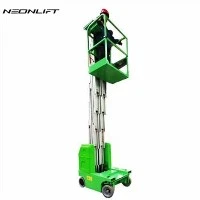
If you’ve ever rented or owned a towable man lift, you know it’s that workhorse that pulls double duty—whether you’re trimming trees, fixing a warehouse sign, or putting up holiday lights on a multi-story building. I’ve spent years selling these lifts as a supplier, and one question pops up every single time someone new reaches out: “How often do I really need to maintain this thing? Can’t I just wing it until it breaks?”
I get it. There’s a million things on a job site vying for your attention, and maintenance feels like a chore that eats into your schedule. But here’s the hard truth: skipping consistent upkeep doesn’t just lead to downtime (which kills productivity and eats into profits) — it can be straight-up dangerous. I’ve seen firsthand what happens when a lift’s hydraulic lines go uninspected or tires aren’t checked before a job. So let’s break this down, no fancy jargon, just real talk from someone who’s sold hundreds of towable man lifts (yes, including our line of reliable ones linked here: Towable Man Lift).
First off, let’s get clear on what we’re even talking about here. A towable man lift is different from a permanent boom lift or a tracked model—you hook it to a truck, haul it to the job, set it up, get to work. That towable design means it has two sides to maintain: the “towable” part (tires, brakes, hitch, lights) and the “lift” part (hydraulics, mast, controls, safety locks). If you ignore either, you’re setting yourself up for a headache.
Now, the big question: how often? It’s not a one-size-fits-all answer, but there are hard and fast rules based on how hard you use it, how old the lift is, and what the manufacturer recommends. Let’s start with the basics—routine pre-use checks. This isn’t “full maintenance” but it’s non-negotiable every single time you fire it up. Before you unhitch and crank that lift up, spend 10 minutes walking around. Check tires: are they properly inflated? Any cuts or bulges? Flat tires mid-job on a tall lift? Not fun. Hitch pin: is it locked tight so it doesn’t come loose on the drive over? Lights: brake lights, turn signals—you need those for towing on public roads. Then climb the lift: test the emergency stop, make sure the basket lock clicks when you extend it, wiggle the control stick to see if it’s sticky. I can’t tell you how many times a guy has showed up to a job, skipped this step, and found the emergency brake doesn’t work when he’s 20 feet up. That’s a risk no one needs.
Next, the monthly check. This is the deeper dive that most people skip, and it’s where small problems turn into big ones. Monthly, regardless of how much you’ve used it, you should: drain a small sample of the hydraulic fluid and check for metal shavings (that means a pump or line is wearing out), lubricate the mast’s pivot points (rust and friction will cause the lift to lurch or stop moving), and test the outriggers—make sure they extend all the way, lock in place, and the pressure gauge is reading right. If you own any of our vertical mast models, like the Vertical Mast One Man Lift or the Tracked Vertical Mast Lift With Jib, their masts are smaller, but they still need that monthly lube to keep moving smooth. For our Hydraulic Aluminium Lifts, the aluminum frame is lightweight but can get dented or corroded if you don’t wipe it down monthly, so that’s part of the check too.
Then there’s the quarterly or semi-annual maintenance. This is when you pull things apart a little more. Twice a year, if you use the lift every week, or once a year if you only use it a handful of times, have a certified tech (or if you’re handy, follow the lift’s manual) do a full brake inspection on the tow unit, flush and replace the hydraulic fluid, and test all the safety sensors. The safety stuff is non-negotiable here—things like the load sensor that cuts power if the basket is too heavy, or the tilt sensor that shuts down the lift if it’s on uneven ground. I once had a customer who used his towable lift only for seasonal yard work, so he skipped the annual hydraulic flush. By the third year, the fluid was sludge, and the lift stopped mid-trim when he was 25 feet up. He had to call a crane to get him down, and that cost him way more than a flush would have.


Wait, but what about if you’re using it every day, like a contractor who’s on a new build for months? Then you need to bump that up. Daily pre-checks, weekly lubrication of the mast and outriggers, and a monthly hydraulic fluid top-off instead of just a sample. When you’re using the lift that often, parts wear out faster—tires will get more scuffed, hydraulic lines will take more pressure, and the controls will get more wear. I have a regular customer who’s a building maintenance supervisor at a downtown office tower; he uses his 9.2m Electric Man Basket Lift (perfect for those middle floors!) 5 days a week replacing light bulbs and fixing leaks. We set him up with a customized maintenance schedule because he puts it through the ringer, and he swears it’s cut his repair costs by 40% in a year.
Let’s talk about what happens when you ignore all this, because it’s not just about hassle. OSHA has specific rules for aerial lift maintenance, and failing to follow them can lead to fines, or worse—if someone gets hurt, you’re on the hook. I don’t make those rules, but I’ve seen the consequences. A few years back, a guy I sold a towable lift to skipped maintenance for two years. The lift’s mast failed mid-use, the basket crashed, and he ended up in the hospital. His insurance didn’t cover it because he couldn’t prove he maintained the equipment, and he had to pay medical bills and lost wages out of pocket. That’s a story that sticks with me. Maintenance isn’t just “taking care of the machine”—it’s taking care of yourself, your crew, and your business.
Now, I’m not saying you need to be a mechanic to do this. A lot of the checks are simple: walk around, look for leaks, test the controls. The more complex stuff (like hydraulic flushes or load sensor calibrations) is better left to someone who knows what they’re doing, especially if you’re not comfortable working with heavy machinery. And if you buy from us, we offer a free maintenance guide with every towable lift, plus we have techs on call if you have questions. We don’t just sell you a lift and disappear—we want it to work for you for years.
Here’s the bottom line: consistency beats intensity. It’s way better to spend 10 minutes every day checking your lift, 30 minutes once a month doing a quick deep dive, and an hour twice a year on a full service, than to wait until it breaks and spend a whole day (or more) trying to fix it, plus the cost of downtime. I’ve seen lifts last 10+ years with regular maintenance, and I’ve seen ones die in 2 years because their owners skipped a few checks. It’s that simple.
If you’re in the market for a towable man lift, or you already own one and need to update your maintenance plan, don’t hesitate to reach out to us. We can help you pick the right lift for your needs, walk you through a custom maintenance schedule, and make sure you’re safe on every job.
References
- Occupational Safety and Health Administration. (2022). Aerial Lifts: Maintenance and Inspection. U.S. Department of Labor.
- International Association of Elevator Contractors. (2021). Best Practices for Towable Aerial Lift Maintenance. IAEC Publications.
- EquipmentWatch. (2023). Towable Man Lift Lifecycle Cost Analysis: Maintenance vs. Repair Expenses.