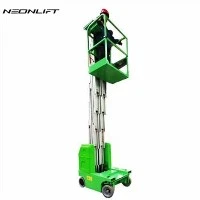
Hey everyone! If you’ve ever worked in construction, facility maintenance, tree trimming, or even setting up event lighting, you know towable man lifts are total game-changers. I’ve been in the aerial lift game for years—run a company that sells and services these bad boys—and let me tell you, nothing frustrates me more than hearing about preventable accidents from folks cutting corners on safety. Towable man lifts aren’t something you can just hook up to a pickup and wing it; there are specific steps you have to take to keep everyone on the ground and in the basket safe. Let’s break down exactly what precautions matter, straight from someone who’s seen both the good and the really bad outcomes of skipping these rules.
First off, let’s get one thing clear: a towable man lift is not the same as a regular scissor lift or a vertical mast lift you’d see on a job site. It’s designed to be towed from location to location, so there’s extra stuff that goes into prepping it for transport AND use. I can’t tell you how many times I’ve had a customer show up to pick up a unit and say, “Yeah, I just need something to get my crew up 30 feet for a day” without realizing the basic checks they need to do before they even leave my yard.
Let’s start with the pre-tow and pre-use inspection—this is non-negotiable. I always tell my customers: if you skip this, you’re one bad decision away from a call that’ll keep you up all night worrying. First, when you’re hooking it up to your vehicle, don’t just rely on the hitch latch. Double-check that the safety chain is crossed properly, so if the hitch ever comes loose, the lift doesn’t go rolling into a ditch. Then, test the lights—brake lights, turn signals, taillights—because when you’re towing this down a highway, other drivers need to see you. Last year, I had a guy who forgot his turn signal was out and almost caused a pileup on I-95; he thought “it’s just a towed lift, who’s gonna notice?” Spoiler: everyone on the highway notices, especially when it’s 10 feet tall.
Once you get to the job site, before you even unhitch, do a visual walkaround of the lift itself. Check the tires for air pressure and tread—low tread on a wet grassy spot means the whole unit could tip when you extend it. Then, check the hydraulic hoses for cracks or leaks; a ruptured hose 25 feet up is a nightmare waiting to happen. I’ve had to repair more than a few lifts where a hose was chafed against the frame because someone didn’t look. Oh, and don’t forget to check the outriggers! Most towable man lifts have these adjustable legs that stabilize the unit when it’s in use. You have to extend all four, make sure they’re resting on solid ground—no soft dirt, no mud, no loose gravel. I saw a crew last year set up on a patch of wet mulch; when they extended the boom, the outrigger sunk 6 inches, and the lift tilted enough that someone had to climb down fast before it tipped over. It wasn’t even a huge job, just replacing a light on a church steeple, but it could’ve been way worse.
Another big one: operator training. I don’t care how handy you are around tools or how many times you’ve seen a lift on a job site—if you haven’t been trained to run a towable man lift, you shouldn’t be in the basket. OSHA has strict rules about this, and for good reason. Just because you can operate a One Man Scissor Lift doesn’t mean you know how to handle a towable boom lift, which has different weight limits and mobility quirks. I offer hands-on training with every unit I sell, and I make it mandatory for anyone who hasn’t used this specific type before. Training should cover everything from how to level the lift, to how much weight is allowed in the basket (it’s never as much as you think!), to what to do if the lift malfunctions mid-air. I once had a customer’s crew member skip training, try to lift two big guys and a bunch of tools in the basket, and hit a power line—thankfully no one was hurt, but it was a wake-up call that training isn’t a “suggestion.”
Weight limits—let’s hammer this home. Every towable man lift has a maximum load capacity, usually listed on a big metal plate right on the basket. Most people see that number and think “that’s for people plus tools,” but no—it’s total weight. So if the basket is 50 lbs, two workers at 200 lbs each, and 100 lbs of tools, that’s 550 lbs, not 600. I’ve had guys toss a 50 lb bucket of nails and a ladder in there on top of two people, and that’s way over the limit. Overloading a lift makes it tip easier, straining the hydraulic system, and even causing the basket to tilt dangerously. If you need to carry extra tools up, use a tool belt or a harness, don’t stack them in the basket—most lifts have little hooks or racks for that exact reason.
Now, when you’re actually working in the basket, safety gear is non-negotiable too. Full-body harnesses with lanyards that attach to the lift’s anchor points, not to each other. Hard hats, non-slip shoes, no loose clothing that could get caught in the machinery. I’ve seen a guy’s hoodie string catch on the boom, and it took two people on the ground to help him get untangled before he fell. Also, never, ever use the lift to move horizontally when someone’s in the basket—wait, no, that’s a rule I see broken all the time. Some people think “it’s just moving 10 feet over to the next window,” but if the ground is uneven or you hit a small rock, that’s enough to throw off the balance. Stay in the basket, lower it all the way, reposition the lift, then lift back up. It takes an extra 5 minutes, but it’s way better than an accident.
Power line safety is another thing that can’t be overlooked. I can’t tell you how many job sites are near power lines, and people don’t check the clearance before they extend the boom. The rule is: always keep at least 10 feet of distance from power lines under 50kV, and more for higher voltage. That means before you even lift the basket up, do a 360 walkaround of the job site, note where power lines are, and mark them with flags if you can. If you have to work near lines, call the utility company to shut off power temporarily—they’ll do it for free, and it’s way safer than risking electrocution. A few years back, a local contractor didn’t check lines, extended his boom, and got zapped; he survived, but he had to deal with lifelong nerve damage, and his business paid huge fines. It’s not worth cutting that corner.


What about transport safety when you’re moving the lift to a new job site? Too many people think “it’s just a towed unit, so drive normal,” but that’s not the case. When towing a towable man lift, you have to drive slower than the speed limit—max 55 mph on highways, even less on back roads. The lift is tall, so wind can catch it easier, and sudden stops or turns can make it fishtail. Also, never tow the lift with the basket extended—always fold the boom or scissor all the way down, secure it with the safety latches, and make sure it’s locked in place. I’ve seen a basket flapping in the wind on a highway because someone didn’t lock it, and that’s a hazard for everyone around.
Another thing I always tell my customers: inspect the lift before EVERY use, not just once a week. Like, every single time you hook it up and unhitch it. Last month, a customer brought a lift back to my shop because it wouldn’t extend, and turns out a small rock had gotten stuck in the outrigger mechanism—he thought he checked once that morning, but he skipped the pre-use because he was in a hurry. Small debris can cause big malfunctions, so take the 10 minutes to go over every part.
Wait, let’s talk about different types of towable man lifts too, because not all are the same. For example, a Two Man Lift Platform has a higher weight limit but still needs proper balance, while a Mobile Hydraulic Vertical Self-Propelled Mast Lift is a bit more compact, so it’s easy to maneuver in tight spaces but still needs careful outrigger placement. Even if you’re familiar with one type, don’t assume another is the same—read the operator manual that comes with your unit, I still have customers who throw the manual away and then call me confused about how the emergency stop works. Oh, emergency stops! Test that every time too. If the lift malfunctions, you need to know where that button is and that it actually works, not just a sticker on the frame.
What about bad weather? If it’s raining, windy (over 20 mph), or icy, don’t use the lift. I know, I know—you have a job to finish, but working in a towable man lift in those conditions is a disaster waiting to happen. Wet ground makes outriggers sink, wind can make the basket swing, ice on the boom can cause it to slip. Wait for better weather, or reschedule the job. I once had a customer try to work in a light rain on a steep slope, and the lift started tilting so much that he had to deploy the emergency descent function to get down—no one got hurt, but it scared him so bad he started following all my safety rules after that.
Now, let’s get real—some of these precautions feel like overkill, right? Especially when you’re on a tight timeline, or the job seems small. But here’s the thing: I’ve been in this business long enough to see that every accident starts with one small skipped step. The guy who forgot to check the outrigger, the crew that skipped training, the worker who put too much weight in the basket—none of them set out to get hurt, they just thought “it’ll be fine.” It won’t be fine, not always.
If you’re in the market for a towable man lift, I’m here to help. I sell reliable, well-maintained units, and I include all the training and support you need to keep your crew safe. Whether you need a compact 12.5m Extended Boom Vertical Mast Work Platform for tight job sites, a small Electric Man Lift for indoor projects where fumes are a no-go, or any other type of aerial lift, I’ve got you covered. I don’t just sell equipment—I care about making sure my customers stay safe on the job.
At the end of the day, towable man lifts are amazing tools that make hard jobs way easier, but they’re only as safe as the person operating them. Don’t cut corners on inspections, training, or safety gear. If you have questions about your unit, or you’re looking to purchase a new one, don’t hesitate to reach out— I’m here to make sure you and your crew get home safe every single day.
References
OSHA 29 CFR 1926 Subpart L – Electrical and Aerial Lifts, 2024
Towable Aerial Lift Safety Guidelines, Aerial Lift Industry Association, 2023
Personal field experience (2010–2024) in aerial lift sales, maintenance, and training