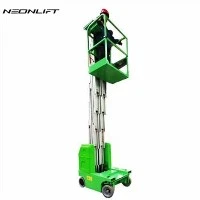
If you’re a small business owner, facilities manager, or even a homeowner tackling a project that requires reaching elevated areas, you’ve probably weighed your options for getting up high safely and easily. Let me tell you, after years of working with folks who need reliable access solutions, I can’t sing the praises of hydraulic small platform lifts enough. They’re not just another tool—they’re a game-changer that solves so many headaches people run into with other types of aerial lifts.
First off, let’s talk about why size matters here. A lot of people assume bigger is better when it comes to lifting equipment, but that’s not always true. If you’re working in tight spaces—like a small retail store backroom, a residential garage, a warehouse aisle with limited clearance, or even a narrow home renovation site—those big, bulky scissor lifts or boom lifts won’t cut it. They’re hard to maneuver, they take up too much room, and you might not even be able to get them through a standard doorway. Hydraulic small platform lifts, on the other hand, are compact enough to fit through 36-inch doorways easily, and their lightweight design means they won’t damage soft flooring like tile or hardwood if you’re moving them around a job site. That’s a huge win for anyone who’s worried about scuffing floors or getting stuck in a cramped space.
Now, let’s get into the science part (don’t worry, I’ll keep it simple). Hydraulic systems work by using pressurized fluid to move a cylinder, which lifts the platform up and down. Compared to mechanical lifts that use gears or chains, this system is way smoother and more consistent. You won’t get that jerky, stop-start motion that makes you nervous when you’re 10 feet up changing a light fixture or reaching for inventory on a high shelf. The hydraulic mechanism also provides better control—you can adjust the lift speed to match what you’re doing, whether you’re slowly positioning a box or making quick adjustments for a repair. And because there are fewer moving parts than mechanical lifts, there’s less that can go wrong out of the blue. That reliability is something you can’t put a price on when you’re on a job that has to get done on time.
Another big advantage is versatility. Wait, versatility in a small lift? Yep, absolutely. Let me break it down. If you need to move it around, many hydraulic small platform lifts are portable—they have built-in handles or can be towed behind a work truck, so you can take them from a residential job to a small construction site in no time. Some even have extendable platforms, so you can adjust the size to fit the task: maybe you just need room for one person, or you need to haul a few tools up with you. Unlike larger aerial lifts that are only good for very specific jobs, these small ones work for everything from changing holiday lights in a shop to repairing HVAC units in a tight basement to installing shelves in a small office. I’ve had customers use them for all sorts of random projects, and they always come back saying they wish they’d invested in one sooner.
Safety is non-negotiable, right? And hydraulic small platform lifts check all the boxes here. For starters, they have built-in safety features that are tailored to small-scale use: non-slip platform surfaces to keep you from sliding, emergency lowering systems that work even if the power cuts out, and guardrails that fold down when you need to move through doorways or narrow spaces. Unlike ladders, which are a top cause of workplace injuries every year, these lifts keep you stable the whole time you’re up. No more teetering on the top rung of a ladder while holding a heavy tool or material. I’ve seen way too many people get hurt that way, and switching to a small hydraulic lift is such a simple way to lower that risk. It’s also worth noting that many of these lifts are electric, so they don’t emit fumes, which is a huge plus for indoor use—no need to worry about ventilating a small space or breathing in exhaust while you work.


Cost is another factor that makes hydraulic small platform lifts stand out. Let’s compare them to renting larger lifts, for example. If you only need a lift for a weekend project, renting a standard scissor lift might cost you a few hundred dollars, but if you’re using one regularly—like a small business that does monthly maintenance, or a homeowner who tackles several projects a year—buying your own hydraulic small platform lift pays for itself in no time. They’re also cheaper to maintain than bigger lifts. Since the hydraulic system is straightforward to service, and parts are easy to find, you won’t have to shell out a ton of money every time something needs a tune-up. And because they’re compact, they don’t take up a lot of storage space when you’re not using them—perfect for someone with a small garage or storage closet.
Wait, but let’s make sure I’m not selling you on something that doesn’t fit all needs. If you’re working on a big construction site with wide-open spaces, a tracked electric scissor lift might be a better fit for heavy-duty, outdoor use. But for most small, indoor, or tight-space projects, the standard small hydraulic lifting platform is exactly what you need. Let’s clarify the difference: a scissor man lift is usually a bit larger, designed for medium-duty use, while mobile platform lifts are super portable and great for moving between job sites frequently. A 7m electric scissor lift is an option if you need to reach a bit higher—up to 23 feet, which is plenty for most small-scale projects without the bulk of a full-sized lift.
I know what some of you might be thinking: “A small lift can’t hold much weight.” But modern hydraulic small platform lifts are built to handle more than you’d expect. Most can support between 500 and 1,000 pounds, which is enough for two people, plus tools, parts, and whatever else you need to bring up with you. You don’t have to leave your drill or your supply box down on the ground—you can bring it up, which saves you time and trips up and down. That’s a small convenience that adds up to a lot when you’re working on a project.
Another thing I love about these lifts is their user-friendliness. You don’t need a special license to operate a hydraulic small platform lift—unlike some larger aerial lifts that require certification. The controls are simple, usually just a few buttons to move up, down, and forward, so you can figure it out in five minutes flat. That’s a huge relief for small business owners who don’t have time to send their employees to weeks of training, or for homeowners who want to tackle a project themselves without jumping through hoops. No complicated manuals, no confusing setup—just get it out, move it to where you need it, and go to work.
Let me talk about a real customer example to make this concrete. A few months back, I worked with a small café owner who needed to install new lighting fixtures in their high, narrow ceiling. They had a ladder, but it was too shaky, and a big scissor lift couldn’t fit through their back kitchen door. They rented a small hydraulic platform lift for a week, but by the end, they were complaining about how expensive the rental was. So they ended up buying their own, and now they use it every month for routine maintenance—changing lightbulbs, repairing the overhead vent, even restocking the high shelves in their supply closet. They told me it’s one of the best investments they’ve made for their business, and they save hundreds of dollars every year instead of renting. That’s the kind of practical benefit you just don’t get with other lifting solutions.
Now, I want to be transparent, because I know no product is perfect. Hydraulic small platform lifts are designed for small to medium tasks, so they aren’t the best for reaching heights over about 25 feet. If you need to go higher than that, you’d be better looking at a different lift option, like the 7m electric scissor lift which reaches around 23 feet. But for most people, that’s more than enough. They also aren’t built for heavy, rugged outdoor use over rough terrain—for that, a tracked electric scissor lift would be a better pick. But if you’re working on smooth, flat surfaces, either indoors or out, they’re totally fine. So it’s all about matching the lift to your specific needs.
At the end of the day, the main advantages of a hydraulic small platform lift come down to three things: they fit where big lifts can’t, they’re safe and easy to use, and they save you time and money in the long run. No more struggling with ladders that feel like they’re going to tip, no more fighting to get a bulky lift through a narrow door, no more overpaying for rental equipment you only use once or twice. Whether you’re a small business, a tradesperson, or a homeowner, this is a tool that can make your projects way less stressful and way more efficient.
If you’re ready to learn more about how a hydraulic small platform lift could work for your projects, or if you have questions about the different options available—like the standard small hydraulic lifting platform, mobile platform lifts, scissor man lift, or even larger models for bigger tasks—we’re here to help. Our team can walk you through all the specs, help you figure out which size and features are right for what you need, and make sure you get exactly what fits your space and budget. Don’t waste another minute dealing with the hassle of old lifting methods; reach out to us to start the conversation and find the perfect solution for your access needs.
References:
- Occupational Safety and Health Administration. (2022). Ladder-related injuries in the workplace. Retrieved from OSHA’s official safety and health database
- Lift and Access. (2023). Compact aerial lifts for tight spaces: A buyer’s guide. Retrieved from Lift and Access industry resources
- Fluid Power Society. (2021). Basic hydraulic system functionality for lifting equipment. Retrieved from the Fluid Power Society technical library
- Small Business Administration. (2022). Cost-effective equipment solutions for small-scale maintenance and construction. Retrieved from SBA small business resource center