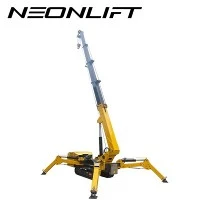
Hey there, if you’ve ever worked in construction, facility maintenance, or event setup, you know how essential aerial man lifts are—they get your team high, safe, and efficient, way better than balancing on a wobbly ladder or trying to hoist materials with a cherry picker. But one question I get non-stop from contractors, facility managers, and small business owners is: “What’s the actual cost of an aerial man lift?” Like, is it just a one-time number, or are there hidden fees that sneak up on you? As a guy who’s been supplying aerial lifts for over a decade, I’ve seen way too many people get burned by not planning for the full cost—so let’s break this down straight, no jargon, no fine print.
First, let’s get this out of the way: there’s no single price for an aerial man lift. It depends on what you need—are you working on a 20-foot sign, a 60-story building, or a tricky backyard job with uneven ground? That means the cost will vary based on the type of lift, whether you buy new or used, how you use it, and all the extra stuff that comes with operating it. Let’s start with the big-ticket items: the lift itself.
If you’re looking for a workhorse for daily construction or industrial jobs, telescopic self-propelled aerial platforms are super popular. These bad boys reach 40 to 180 feet, can lift heavy materials and two or three workers at once, and move around smoothly on rough job sites. A new telescopic self-propelled aerial platform will set you back between $35,000 and $150,000, depending on the reach, weight capacity, and features like rough-terrain tires or hybrid power. It’s a big upfront cost, but if you’re renting it out or using it 50+ weeks a year, it makes sense to own. If you only need it a few times a year, renting is way cheaper—daily rental for a 60-foot telescopic lift is around $400 to $600, weekly is $1,500 to $2,500, and monthly is $4,000 to $7,000.
Another common option is hydraulic ladder lifts. Wait, these aren’t the old-fashioned step ladders you use in your closet—they’re compact, hydraulic-powered lifts that extend to 20 to 50 feet, perfect for interior work like painting, electrical repairs, or hanging lights in a warehouse. A new hydraulic ladder lift costs between $8,000 and $25,000, which is way more budget-friendly than the big telescopic models. Rental for these is even lighter on the wallet: daily around $150 to $250, weekly $500 to $800. I’ve seen small painting companies buy these for their team because they’re easy to move around tight spaces and don’t require a big operator’s license in most cases.
For solo workers or guys who need something super portable, single mast aluminum personal man lifts are a game-changer. These are lightweight, weigh under 1,000 pounds, and can reach up to 30 feet—you can even roll them through standard doorways without a crane. A new single mast aluminum personal man lift runs $3,000 to $8,000, which is basically a no-brainer for small businesses or one-person crews. Renting one is even cheaper: daily $75 to $150, weekly $250 to $400. I had a customer who runs a window cleaning business that bought four of these last year—they use them for residential jobs and saved thousands on renting larger lifts that were overkill for 25-foot two-story homes.
Now, if you’re working on uneven, muddy, or sloped terrain—think grading a new parking lot or doing tree trimming on a hillside—you’ll need a track lift. Our most popular model here is the tracked vertical mast lift with jib. The tracks give it way more traction than wheeled lifts, so it doesn’t sink in soft ground, and the jib lets you reach around obstacles like trees or concrete walls. A new tracked vertical mast lift with jib costs between $15,000 and $45,000, depending on reach and jib length. Rental for these is a bit pricier because of their specialized design: daily $250 to $450, weekly $800 to $1,500. I can’t tell you how many times a job site has called me panicking because a wheeled lift got stuck in mud—tracked lifts eliminate that headache, so the extra cost is worth it if your work is in rough spots.
Hydraulic man lifts are a broader category that includes all the lifts powered by hydraulic systems, from the compact personal models to the larger scissor lifts. They’re reliable, low-maintenance, and work great for both indoor and outdoor jobs. A new hydraulic man lift can range from $2,000 for a small 15-foot model up to $120,000 for a large 80-foot rough-terrain lift. Rental prices here follow a similar pattern to the other hydraulic models, with daily rates starting around $100 for small units and going up to $500 for the big ones. If you’re not sure which type fits your job, starting with a hydraulic lift is a safe bet—most job sites have experience operating them, and parts are easy to find if something breaks.
Wait, but hold on— the cost doesn’t stop when you buy or rent the lift. I see so many guys forget about the “hidden” costs that add up fast. Let’s run through those. First, safety training. Most places require operators to have a certification, and that’s not a $20 online course—proper hands-on training for aerial man lifts can cost $150 to $300 per person, and you need to refresh it every 3 to 5 years. If you skip that, you’re not only risking getting fined, you’re putting your team at risk of accidents that could cost way more than the lift itself.
Then there’s maintenance and repairs. If you own the lift, you need to do regular checks—every 100 hours of use, you have to change the hydraulic fluid, inspect the tires or tracks, and test the safety features like the emergency stop and load sensor. Annual maintenance for a mid-sized lift runs $500 to $1,500, and if something breaks—like a faulty hydraulic pump or a damaged platform gate—repairs can be $1,000 or more. If you rent, most of that falls on the rental company, but you have to pay for damage if you misuse the lift (like overloading the platform or driving it into a wall).
Fuel and power is another thing. Most large self-propelled lifts run on diesel, which is expensive these days—you can burn 2 to 5 gallons of diesel per hour, so if you’re running a lift 8 hours a day, that’s $30 to $75 in fuel a day. Some newer models run on electric or hybrid power, which is cheaper, quieter, and better for indoor work, but they have a limited runtime—around 8 to 12 hours on a single charge, so you need to plan for charging time. Personal lifts and small ladder lifts are almost always electric, so you just need a standard outlet to plug them in, no extra fuel costs.
Insurance and registration, too. If you own a lift, you need to have general liability insurance, and some places require specific insurance for aerial equipment. Annual insurance for a $50,000 lift is around $500 to $1,000, and if you’re renting it out, you’ll need extra coverage. Registration fees vary by state, but they’re usually $100 to $300 a year.
Now, should you buy or rent? That’s the big question most people ask after figuring out the upfront cost. Let’s break that down. If you use a lift less than 10 weeks a year—like for holiday decorations, seasonal construction, or one-off maintenance jobs—renting is almost always cheaper. You don’t have to deal with maintenance, storage, or depreciation, and you can get a newer model every time. But if you use a lift 20+ weeks a year, buying is the better long-term investment. Let’s do the math: a $50,000 telescopic lift has a lifespan of around 10 years, so that’s $5,000 a year, plus maintenance ($1,000 a year) = $6,000 a year. Renting that same lift for 20 weeks a year at $5,000 a week would be $100,000—way more than buying. But if you only use it 5 weeks a year, that’s $25,000, way more than the monthly payment or rental.
I also want to mention used lifts, because they can be a middle ground if you’re on a budget. A 2-year-old used telescopic lift that’s only been used a few times can cost 30-50% less than a new one, so around $17,500 to $37,500 for a 60-foot model. But you have to check for wear and tear—make sure the hydraulic system works, the tires are good, and it has all the safety certifications. A used lift is a great option if you know the previous owner took care of it, just don’t skip the inspection.
Wait, and let’s talk about the value of safety and reliability, because that’s the part that’s easy to overlook when you’re just looking at the sticker price. A cheap lift might save you a few thousand bucks upfront, but if it breaks down on a job site mid-project, you’re losing money on downtime, and worse, your team is at risk. I’ve had customers come to me after buying a no-name lift from a random seller that had faulty brakes—they had to replace the whole brake system for $2,000, and the job was delayed 3 days, costing them $10,000 in lost revenue. Buying from a reputable supplier like us means you get a lift that’s been tested, comes with a warranty, and you have someone to call if something goes wrong.
So putting it all together, the total cost of an aerial man lift isn’t just the price tag on the equipment. It’s the type of lift you need, how often you use it, safety training, maintenance, fuel, insurance, and whether you buy or rent. For a small hydraulic ladder lift or personal man lift, you’re looking at $2,000 to $8,000 for the lift itself, with low ongoing costs. For a large telescopic rough-terrain lift, it’s $35,000 to $150,000 upfront, plus several thousand a year in maintenance and other fees. Rents start around $75 a day for small models and go up to $600 a day for the big ones.
If you’re still not sure which lift fits your needs, or you want a personalized quote, hit us up to chat about what your job entails—whether you’re doing residential painting, commercial construction, or event setup, we can help you find something that’s safe, efficient, and fits your budget. Don’t waste money on a lift that’s too big or too small for your work—we’re here to make sure you get exactly what you need without the hidden costs.
References:


- Occupational Safety and Health Administration (OSHA). (2023). Aerial Lift Safety Standards.
- Association of Equipment Manufacturers (AEM). (2024). Aerial Lift Industry Cost Guide.
- National Roofing Contractors Association (NRCA). (2023). Equipment Cost Analysis for Roofing and Aerial Work.
- Equipment World. (2024). 2024 Aerial Lift Rental and Purchase Price Report.
- International Association of Plumbing and Mechanical Officials (IAPMO). (2023). Hydraulic Man Lift Safety and Usage Guidelines.