Against the backdrop of fast‑growing and fine‑tuned industrial logistics, cutting costs, boosting productivity and optimizing manpower have become key priorities for enterprises to stay competitive and achieve sustainable growth. Traditional manual pallet handling is labor‑intensive, costly and comes with notable safety risks. It can hardly keep up with high‑frequency, high‑density workflows in modern warehouses and production shops.
Electric pallet trucks have reshaped manual material‑handling workflows and significantly freed up labor resources. Thanks to high working efficiency, great site adaptability, low energy consumption and reasonable maintenance costs, they have gained wide adoption across the material‑handling sector and become essential equipment for warehousing, manufacturing and distribution businesses. Why are electric pallet trucks in such high demand? This article outlines their practical value in real‑world operations, explaining how they resolve common handling pain points, improve throughput and help factories keep operating expenses under control.
1. Break Manpower Bottlenecks for Better Handling Quality & Productivity
Pallet moving is a repetitive, high‑frequency task in warehouses, production floors and retail distribution centers. Manual pallet jacks rely entirely on physical force. Operators get fatigued after long shifts, which lowers throughput and may lead to mis‑placement or missed shipments. When moving heavy loads, there is higher risk of cargo collision and workplace injury. Under normal conditions, an experienced worker can handle fewer than 50 pallets per day using manual pallet trucks, insufficient for high‑volume continuous operations.
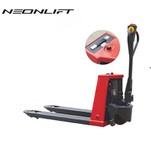
Electric pallet trucks are powered by motors to mitigate drawbacks of fully manual handling. With stable power output, operators control forward, reverse, steering and lifting via the control handle. One operator can finish the whole workflow independently and handle loads ranging from 1 ton to 3 tons.
Productivity sees obvious improvement: electric pallet trucks can deliver 3‑4 times the output of manual units, completing 150‑200 pallet transfers per operator per day. Physical burden on staff is greatly reduced, while human‑error‑related mistakes and safety incidents are minimized for more consistent and standardized handling.
Compact dimensions and small turning radius enable flexible movement in narrow aisles, tight racking areas and elevator cabins. They perform well for warehouse inbound‑outbound processes, stock replenishment, production‑line feeding and finished‑goods transfer. Space utilization is maximized, solving common pain points including limited aisle space, poor maneuverability and low storage‑space efficiency.
2. Lower Long‑Term Total Cost for Light‑Weighted Operations
Many buyers hold the misconception that electric pallet trucks are poor value for money due to higher upfront purchase cost. Nevertheless, when calculating total cost of ownership, electric models beat manual pallet trucks and fuel‑powered forklifts in labor, maintenance and energy expenditure.
Reduce labor expenditure One electric pallet truck can replace the workload of 2‑3 manual handlers, allowing leaner staffing for material‑handling tasks. Assuming average monthly salary of USD equivalent 5000 local currency per worker, a single unit can save around USD equivalent 12000‑18000 labor costs yearly. The investment can be recovered within a short period and keeps generating savings in long‑term service.
Simple structure with low maintenance demand Electric pallet trucks feature simple mechanical layout with fewer precision assemblies and wearing parts, resulting in lower failure rates. Daily work mainly consists of battery and circuit inspection without complicated service procedures. Compared with frequent hydraulic troubleshooting and oil‑leak repairs for manual trucks, plus oil‑filter replacement and emission‑related service for fuel forklifts, considerable costs on spare parts and working hours can be saved annually.
Energy‑saving and eco‑friendly Equipped with lithium‑ion or lead‑acid batteries, fully‑charged units support 4‑8 hours continuous operation to match full‑shift factory workflows. Electricity costs are much lower than fuel expenses. Low noise and zero exhaust emissions meet green manufacturing requirements without extra pollution‑treatment investment.
For small‑to‑medium‑size facilities, most electric pallet trucks work with standard 220V power supply. No special charging infrastructure is required, lowering entry barriers for businesses of all scales.
3. Continuous Technical Upgrade for Diverse Working Conditions
Evolving logistics requirements have transformed electric pallet trucks from basic movers into multi‑functional material‑handling devices covering light‑duty, heavy‑duty, indoor and semi‑outdoor applications.
A full load‑capacity range is available: 1 ton, 1.5 ton, 2 ton and 3 ton variants fit retail light goods, standard warehouse pallets and heavy semi‑finished / finished workshop components for different industries.
Lithium‑ion batteries are growing mainstream. Compared with traditional lead‑acid batteries, Li‑ion packs are lighter, longer‑lasting and more stable. Fast‑charging capability brings 80 % capacity within 30 minutes for opportunity charging to ease range anxiety. Recyclable lithium‑ion batteries also support corporate green development goals.
Smart control systems further boost usability and safety on newer models. Functions include operation‑data collection, self‑diagnosis, multi‑speed adjustment and creep mode for precise positioning. Real‑time data helps managers monitor equipment status and spot potential risks in advance. Creep speed avoids collisions with racks and high‑value goods in dense storage zones. Built‑in fault diagnosis shortens troubleshooting downtime and supports stable heavy‑cycle operation.
Custom‑built variants such as explosion‑proof and low‑temperature pallet trucks serve special‑sector requirements for chemical, pharmaceutical and cold‑chain industries, complying with strict site safety standards and expanding application boundaries.
4. Wide Industry Adoption as a Cornerstone of Logistics Upgrade
Electric pallet trucks are widely deployed in warehousing & logistics, intelligent manufacturing, retail, cold storage, pharmaceutical‑chemical and FMCG processing sectors. They excel at short‑distance sporadic transport in small warehouses, cyclic material delivery for mid‑size workshops, as well as high‑frequency inbound‑outbound tasks in large logistics parks, resolving various on‑site handling challenges with flexibility, cost‑effectiveness and reliable safety.
Selecting a well‑matched electric pallet truck is more than labor‑saving and throughput‑boosting. It also optimizes supply‑chain performance, controls operating costs and strengthens overall competitiveness. Driven by new‑energy and control‑system innovations, electric pallet trucks will keep improving in performance and intelligence and occupy a more important position in industrial material‑handling.
Step away from strenuous manual handling and high‑cost traditional workflows. Proper electric pallet trucks make cargo transfer labor‑saving, efficient and economical. Fine‑tuned logistics operations help enterprises cut costs, raise efficiency and consolidate market advantages.
Our professional team offers one‑on‑one selection suggestions based on your site layout, working intensity and maintenance plans.
Inquiry: Email: sales@daxlifter.com WhatsApp / WeChat: +86 15192782747 Feel free to reach out for customized material‑handling solutions.