Yo, what's up everyone! As a supplier of Aerial Man Lifts, I get asked a lot about the vertical reach of these bad boys. So, today I'm gonna break it down for you and give you all the deets on what the vertical reach of an aerial man lift really means and how it affects your work.


First off, let's talk about what an aerial man lift is. It's basically a type of equipment that's used to lift people to high places. You'll often see them in construction sites, warehouses, and other industrial settings where workers need to access elevated areas safely and efficiently. There are different types of aerial man lifts out there, each with its own unique features and benefits.
Now, the vertical reach of an aerial man lift refers to how high it can go. It's measured from the ground level to the highest point that the platform or basket can reach. This is a super important factor to consider when choosing an aerial man lift because it determines whether the lift can get you to the height you need for your job.
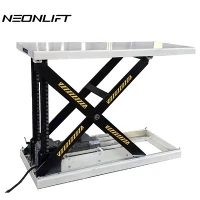
There are a few things that can affect the vertical reach of an aerial man lift. One of the main factors is the design of the lift itself. For example, scissor lifts typically have a more limited vertical reach compared to boom lifts. Scissor lifts work by using a series of criss - cross supports that expand and contract vertically. They're great for jobs that require a stable platform at a moderate height, usually up to around 40 - 50 feet. You can check out our Mobile Hydraulic Vertical Self - Propelled Mast Lift, which is a type of scissor - like lift with a decent vertical reach for smaller - scale jobs.
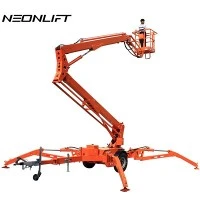
On the other hand, boom lifts have a greater vertical reach. They come in two main types: articulating and telescopic. Articulating boom lifts have joints that allow the boom to bend and reach over obstacles. They're perfect for jobs where you need to get to a specific point that might be blocked by something on the ground. Telescopic boom lifts, as the name suggests, have a straight, extendable boom. They're designed to reach high - up places in a more straightforward manner. Some telescopic boom lifts can reach heights of over 100 feet!
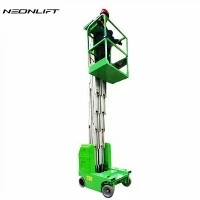
Another factor that affects vertical reach is the type of power source. Electric aerial man lifts are usually smaller and have a more limited vertical reach compared to their diesel or hybrid counterparts. Electric lifts are great for indoor use because they're quiet and don't emit fumes. Our Self - propelled Dual Mast Aluminum Man Lift is an electric option that offers a good vertical reach for indoor maintenance and installation work.
Diesel and hybrid lifts, on the other hand, are more powerful and can handle larger and taller machines. They're often used for outdoor construction and big - scale projects. The extra power allows them to lift the platform to greater heights.
The weight capacity of the lift also plays a role in its vertical reach. If you're planning to carry a lot of tools and equipment along with multiple workers on the platform, you'll need a lift with a higher weight capacity. However, a heavier load can sometimes limit the vertical reach of the lift because the machine has to work harder to lift the extra weight.
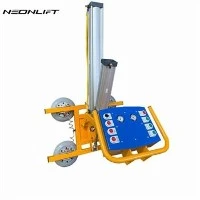
Let's talk about some real - world scenarios where the vertical reach of an aerial man lift matters. Say you're working on a multi - story building. If you're doing window cleaning on the 5th floor, you'll need a lift with a vertical reach that can get you up to that height safely. Our Hydraulic Ladder Lift might be a good option for lower - level building maintenance tasks.
If you're in a warehouse and need to access high - up shelves to stock or retrieve items, a lift with a suitable vertical reach is essential. Our One Man Drivable Lift is a compact and easy - to - maneuver option for this kind of job.
For tree trimming or working on power lines, you'll definitely need a lift with a significant vertical reach. An articulating boom lift can be really useful here as it can reach over branches and other obstacles.
When choosing an aerial man lift based on vertical reach, you also need to consider the working environment. If you're working in a confined space, a lift with a smaller footprint and a more precise vertical reach might be better. Our Aluminium Alloy Single Mast Lift is lightweight and easy to move around in tight areas.
In addition to the vertical reach, you should also think about the horizontal reach. Some jobs might require you to move the platform outwards as well as upwards. For example, if you're painting the side of a building that has an overhang, you'll need a lift that can reach out horizontally to cover the entire area.
So, how do you determine the right vertical reach for your project? First, assess the height of the work area. Measure from the ground to the highest point you need to access. Then, consider any additional factors like weight capacity, working environment, and horizontal reach. It's also a good idea to consult with an expert. As a supplier, we're always here to help you figure out which lift is the best fit for your needs.
If you're in the market for an aerial man lift, don't hesitate to reach out. We've got a wide range of options with different vertical reaches to meet your specific requirements. Whether you're a small business owner looking for a lift for occasional use or a large construction company in need of heavy - duty equipment, we can help you find the perfect lift. Contact us to discuss your project and get a quote. We'll work with you to make sure you get the most suitable aerial man lift for your job.
References
- Industry standards and guidelines for aerial man lifts
- Manufacturer's specifications for various aerial man lift models
- Case studies of different projects using aerial man lifts