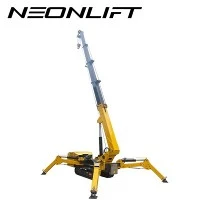
If you’re running a construction crew, doing a big home renovation, or tackling any job that requires working 20+ feet in the air, you’ve probably looked into boom lifts. These machines are total game-changers for getting work done safely and efficiently, but one thing I see a lot of folks sleep on (especially smaller contractors or first-time buyers) is insurance. Yeah, it’s not the most exciting part of the job, but skipping the right coverage can cost you way more than any savings on equipment. As a boom lift supplier, I work with dozens of teams every month helping them figure this stuff out, so I’m breaking down exactly what you need to know to stay covered, avoid headaches, and keep your projects moving.
First off, let’s cut through the confusion: there’s no one-size-fits-all insurance for boom lifts. The coverage you need depends on the type of lift you’re using, how you’re using it, and who’s operating it. For example, a compact boom lift for indoor ceiling work needs different coverage than a heavy load outdoor construction lift hoisting materials to a skyscraper site. Let’s start with the basics, then dive into what different policies cover, and then match it to the lifts we sell here.
First, if you’re renting or buying a boom lift, most rental companies will require proof of insurance before they even hand over the keys. That’s not just a random rule—they need to make sure if the lift gets damaged while in your possession, you’re on the hook, not them. But even if you own your lift, you can’t just rely on your general business insurance and call it a day. A lot of general liability policies have huge gaps when it comes to specialized equipment like aerial lifts.
Let’s break down the must-have coverages, step by step. The first one most people need is General Liability Insurance. This covers things like if the boom lift knocks over a piece of scaffolding, hits a bystander, or damages a neighbor’s property. Wait, but general liability usually has a limit—like $1 million per occurrence. For most small to mid-sized jobs, that’s enough, but if you’re doing big commercial work, a lot of project owners will require a higher limit, like $2 million. Also, make sure your policy specifically names the boom lift as the equipment in question. I’ve had a customer before who found out their general liability policy only covered their work trucks, not their electric articulated spider lift for indoor projects—big oops when they accidentally nicked a fancy storefront window. That’s a $5,000 bill they had to pay out of pocket because their coverage didn’t extend to their aerial equipment.
Next up, there’s Equipment Breakdown Insurance (sometimes called Inland Marine Insurance). This is super important because it covers the lift itself if it gets damaged, stolen, or vandalized. Let’s be real: boom lifts are expensive—even a used one runs tens of thousands, and new ones can go way higher. If your hydraulic cherry picker gets stuck in mud overnight and gets water in the engine, or someone breaks into your job site and steals batteries, or you accidentally drop a tool that dents the boom arm, equipment breakdown insurance covers all that. A lot of people skip this and then panic when something goes wrong. I had a construction client last month whose towable articulated boom lift got towed by mistake from a job site and ended up in a junk yard—turns out their general liability didn’t cover theft of the lift itself, only liability from the lift. That’s when they had to use their inland marine, and it saved them from writing a $40,000 check for a new one.
Wait, what about when you’re moving the lift from job site to job site? That’s where commercial auto insurance comes in, right? But hold on—most personal auto policies don’t cover work vehicles, and even some commercial auto only cover vehicles that are road-registered. Towable lifts, obviously, you tow behind a truck, so that’s covered under commercial auto, but what about self-propelled lifts like a compact boom lift that you drive around the site? Those usually don’t need road registration, but you still need to make sure your policy covers them when they’re moving between areas of a job site. Also, if the lift gets into an accident on a public road while you’re towing it, that’s covered under your auto policy, but only if you have the right limits.
Then there’s Workers’ Compensation Insurance. If you’re the only operator, maybe you think you don’t need this, but wait—if you get hurt operating the boom lift, and you don’t have workers’ comp, you could get sued for medical bills. Most states actually require workers’ comp for any business with employees, even part-time. And even if you’re a sole proprietor, some job sites will ask for proof of it, especially for high-risk work like operating aerial equipment. I always tell new operators to make sure they’re trained first too—because if you’re not certified, your insurance could deny a claim if you get into an accident. That’s another big one: operator certification. OSHA requires anyone operating a boom lift to have proper training, and if you get into a crash because you had an untrained person running it, your insurance might not cover you. So that’s not just a safety thing—it’s an insurance requirement too.
Now, let’s talk about specific scenarios, because this is where it gets real for different types of boom lifts. Let’s start with the small stuff: if you’re doing residential work, like painting a second story or trimming trees, a compact boom lift is perfect for that. It’s lightweight, easy to maneuver through gates and backyards, and you’re not carrying heavy loads. For this, your main coverage should be general liability with a $1 million limit, plus a little equipment breakdown insurance to cover the lift itself. Since you’re probably working on private property, you might not need as high a limit, but if you work for a big residential builder, they’ll still want proof of higher liability.
If you’re doing interior work, like installing lighting in a warehouse or working in a mall, an electric articulated spider lift is ideal. It’s electric, so it doesn’t leave fumes, and it’s small enough to fit through doorways and work in tight spaces. For these jobs, you might also need additional coverage called “pollution liability” even though it’s electric—wait, no, actually, if you spill hydraulic fluid, that’s a thing. A lot of general liability doesn’t cover environmental spills from equipment, so that’s an extra add-on you might need if you’re working indoors where spills can damage flooring. I had a client last year who spilled a little hydraulic fluid on a mall’s terrazzo floor—their regular general liability didn’t cover the floor repair, but their equipment breakdown had a pollution add-on that covered it. Saved them a $15,000 bill.
For outdoor construction, if you’re lifting heavy materials like steel beams, concrete blocks, or HVAC units, you’ll need a heavy load outdoor construction lift. These are bigger, more powerful, and can handle way more weight than a standard boom lift. For these, you need much higher limits on general liability—usually $2 million minimum, sometimes $5 million for big commercial projects. Also, since these lifts are on busy job sites with lots of other equipment and people, you might need professional liability insurance too, in case something goes wrong because of a mistake in how you operated or maintained the lift. And don’t forget: these lifts get moved around a lot, so your commercial auto insurance needs to have high property damage limits too, in case you hit another vehicle or structure while towing it.
Then there’s towable articulated boom lifts, which are super popular with small contractors because they’re easy to tow behind a pickup truck, no need for a special trailer or permits for most places. For these, you want to make sure your commercial auto insurance specifically includes towable equipment, because if the lift is damaged while being towed, that’s covered under auto, but only if it’s listed on your policy. I’ve had a ton of clients who bought these lifts and didn’t update their auto policy, and when they got into a fender bender while towing, their insurance said the towable boom lift wasn’t a covered vehicle. Total nightmare.


Wait, what about if you’re renting a boom lift instead of buying? Let’s be clear: rental companies usually require you to have your own insurance, not theirs. Their insurance covers the lift when it’s in their yard, but when it’s in your possession, you’re responsible. Some rental companies offer to add you to their policy, but that’s usually more expensive than getting your own, and it might not give you as much coverage. Always ask the rental company for a “certificate of insurance” that lists you as an additional insured—this is proof you have coverage, and it shows up on their records so they can’t say you didn’t have it if something goes wrong.
A lot of first-time buyers or renters also ask me if they need umbrella insurance. Umbrella insurance is an extra layer of coverage that kicks in if your other limits get exhausted. So if you have a $2 million general liability policy and you get into an accident that causes $3 million in damages, the umbrella policy covers the extra $1 million. For most small contractors, it’s not required, but for anyone doing commercial work, it’s a good safety net. It’s cheap too—like $150 to $300 a year for $1 million in coverage, which is worth it for the peace of mind.
Now, let’s go over the common mistakes I see all the time, so you can avoid them. First, not updating your insurance when you add a boom lift. When you buy a new lift, you have to tell your insurance agent right away—don’t wait until you get a claim. Second, not checking if your policy covers the specific type of lift you have. As I mentioned earlier, some policies only cover work trucks, not aerial lifts. Third, not having operator certification. Even if your insurance doesn’t require it, most job sites do, and if you get into an accident without certification, your claim will be denied. Fourth, not getting enough liability limits for big jobs. I can’t tell you how many clients lost contracts or had to pay out of pocket because their $1 million liability wasn’t enough for a $2 million job.
At the end of the day, insurance for boom lifts isn’t something to cut corners on. It’s an investment in your business, your employees, and your projects. If you’re looking for a boom lift that fits your needs, whether it’s a compact model for small jobs, a heavy load one for construction, or a towable or electric lift for specific work, we’ve got you covered. Reach out to our team to chat about what kind of lift is right for your projects, and we can also help point you toward trusted insurance providers that specialize in equipment like boom lifts. We make it easy to match you with the right gear and the right coverage so you can focus on getting the job done, not stressing about what could go wrong.
For more details on the lifts we offer, check out our pages: Hydraulic Cherry Picker, Towable Articulated Boom Lift, Heavy Load Outdoor Construction Lift, Compact Boom Lift, and Electric Articulated Spider Lift.
References:
- Occupational Safety and Health Administration (OSHA). Aerial Lift Safety Standards, 2024.
- Insurance Information Institute. Commercial Equipment Insurance Guide, 2023.
- National Association of Construction Equipment Owners. Boom Lift Insurance Best Practices, 2024.
- Construction Industry Safety Association. Liability Requirements for Aerial Equipment, 2023.